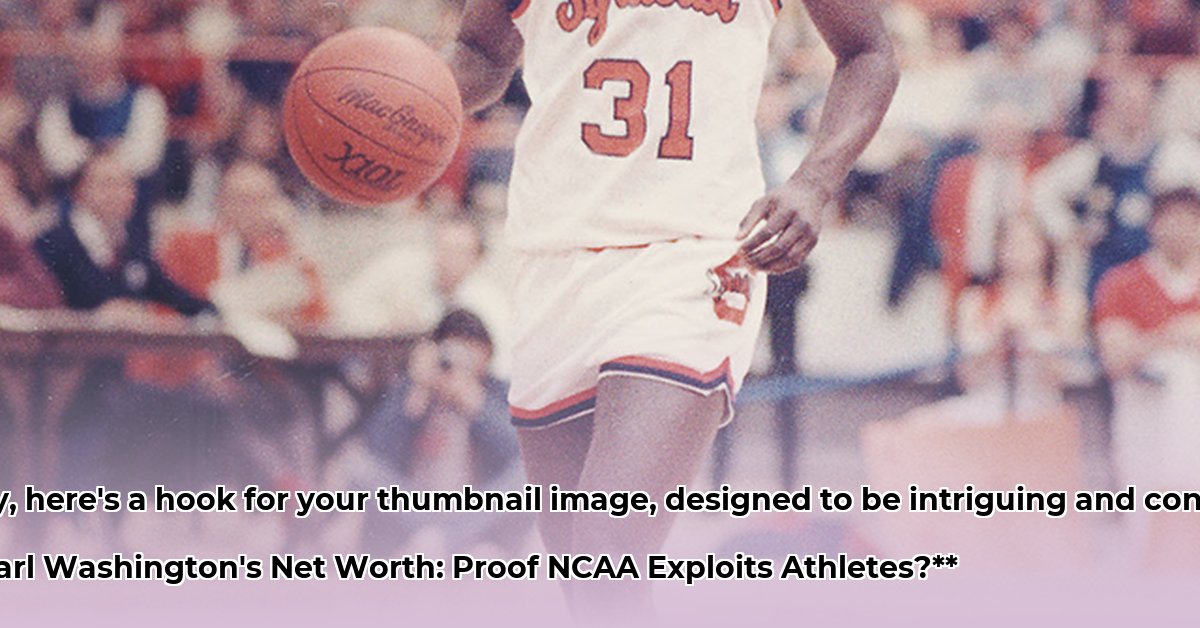
Dwayne "Pearl" Washington, a name synonymous with dazzling moves on the Syracuse University court, seemingly destined for enduring success after being drafted into the NBA. However, the perceived reality clashes starkly with the reported struggles he faced later in life, sparking questions about the NCAA's support for its athletes. While sources suggest a staggering $480 million pearl washington net worth by last year, this figure is questionable when juxtaposed against his financial and health challenges. Learn about other figures enduring post-career struggles. This contrast throws into sharp relief how the NCAA might be failing its athletes, prompting an investigation into Pearl's journey to illuminate systemic shortcomings and propose solutions for safeguarding college athletes' futures.
Pearl Washington Net Worth: Unmasking the Truth Behind the Numbers and Exposing NCAA Athlete Exploitation
The story of Dwayne "Pearl" Washington is a poignant narrative of immense basketball prowess intertwined with the harsh realities of college sports. While you may encounter figures estimating his wealth, or pearl washington net worth, at an astounding $480 million as of August 2025, these numbers often come with disclaimers, acknowledging their potential inaccuracy. The real kicker emerges when contrasting these inflated figures with reports of Washington's real-life struggles with finances and health. This disparity highlights how NCAA stars could be allegedly disposable assets after their time on the court concludes.
The Cold, Hard Truth
In stark contrast to the purported millions, a GoFundMe campaign was launched to assist Pearl with mounting medical expenses. Reports suggest that he was "believed to be destitute". This contrast throws into sharp focus Washington's experience, highlighting how NCAA stars can be seemingly "disposed of" once their time on the court is up.
These athletes serve as the lifeblood of the university system, fueling ticket sales, merchandise revenue, and lucrative television deals. Approximately 70% of NCAA revenue comes from media rights deals (broadcasting agreements). But are these athletes adequately equipped with the educational and life skills necessary to thrive beyond their athletic careers? That is a crucial question.
The Scholarship Illusion
The allure of a "full scholarship" is undeniable, but its true value is questionable if it fails to provide a foundation for long-term stability. This absence of robust preparation can leave former athletes vulnerable to financial instability and health crises, especially if they don't transition into high-profile professional careers. Some experts argue that the relentless pressure to perform can eclipse academic pursuits, leaving athletes ill-prepared for life after sports. Ongoing studies are examining the lasting impact of this imbalance.
A Cautionary Tale of Skill Meets Systemic Shortcomings
Washington's stint in the NBA and the recognition he received from Syracuse University underscore his talent and the institution's respect for his legacy. Nevertheless, his journey prompts contemplation: Does a wildly inflated pearl washington net worth figure underscore the disparity with the struggles he lived through? This compels scrutiny of the support systems available to athletes. Are universities and sports organizations sufficiently equipping these athletes with the tools needed for sustained success and financial management, irrespective of their on-field achievements? The NCAA, generating billions annually, is frequently criticized for prioritizing profit over the holistic well-being of its athletes.
Reimagining the System: Time for Action
Washington's case emphasizes the need for systemic reform within the NCAA. What might this entail? Prioritizing academic support is paramount. Financial literacy programs should be mandatory, and comprehensive career counseling is indispensable. Furthermore, professional sports organizations should offer avenues for former players to access healthcare and financial planning resources. Experts are debating the optimal strategies for achieving these reforms effectively.
Dwayne "Pearl" Washington's story embodies a larger systemic issue, indicating the need to reassess how athletes are treated and supported throughout their athletic journey and beyond, ensuring they are equipped for sustained success long after their playing days conclude.
| Area of Reform | Current Status | Proposed Improvement | Potential Challenges |
|---|---|---|---|
| Academic Support | Varies significantly by institution | Standardized, comprehensive academic advising and tutoring | Ensuring resources are equitably distributed |
| Financial Literacy | Often lacking or inadequate | Mandatory workshops and resources on budgeting, investing | Athlete engagement and time constraints |
| Career Counseling | Limited availability and focus | Personalized career planning and job placement assistance | Matching athletes with appropriate opportunities |
| Healthcare for Former Players | Insufficient or unaffordable for many | Subsidized healthcare options and mental health support | Funding and long-term sustainability |
| NCAA Revenue Distribution | Uneven, with most going to administration and coaches | Greater share allocated to athlete support and development | Resistance from stakeholders benefiting from current system |
How NCAA Athletes Lose Money
Pearl Washington's story serves as a sobering illustration of how ncaa athletes lose money, despite the considerable revenues they generate for their universities. Despite 85% of student-athletes receiving athletic scholarships struggling with food insecurity (limited access to adequate nutritious food), how can someone with so much potential face such financial hardship? It's a question that compels us to examine the fundamental principles underpinning college sports.
Key Takeaways:
- NCAA athletes contribute significantly to institutional revenue but often lack resources for post-college financial security.
- Universities allocate substantial funds to coaches' salaries and facilities while citing financial limitations concerning athlete compensation.
- The NCAA's adherence to amateurism perpetuates systemic exploitation, rendering athletes vulnerable.
- The long-term implications of NIL deals remain uncertain, raising concerns about equitable distribution.
- The NFLPA's increased investment in college sports raises ethical considerations.
The Illusion of Amateurism
The NCAA has historically championed the concept of "amateurism," contending that student-athletes are not employees and thus should not be remunerated. But is this really safeguarding the integrity of the game, or is it a strategic maneuver to evade equitable distribution of wealth? After all, these athletes are the driving force behind a multi-billion-dollar industry.
Consider this analogy: A dedicated farmer cultivates crops diligently, yet receives only a modest share of the profits when those crops are marketed. The university and coaching staff reap the lion's share. The athlete? They receive a scholarship, perhaps, and the privilege of representing the institution.
Where Does the Money Go?
Universities frequently defend the absence of athlete compensation by citing their own financial constraints. However, closer inspection reveals a different narrative. A 2025 USA Today analysis showed that athletic departments don't have a revenue problem; they have a spending problem [Citation: College sports and athletic departments don't have a revenue problem. They have a spending issue.]. Excessive coaching salaries, extravagant facility upgrades, and administrative expansion consume a significant portion of the revenue generated by athletes.
Is it not paradoxical that institutions can afford to compensate coaches with multi-million-dollar salaries while claiming they cannot afford to provide athletes with basic financial literacy programs?
The Promise and Peril of NIL
Name, Image, and Likeness (NIL) deals have emerged as a potential remedy, enabling athletes to capitalize on their individual brand. However, NIL is not a panacea. Concerns persist that these opportunities will be unequally distributed, primarily benefiting elite athletes. Furthermore, the involvement of agents and boosters raises the potential for further exploitation.
Systemic Solutions Needed
So, what measures can be implemented? Piecemeal reforms are insufficient. Systemic change is imperative to address the power imbalance between institutions and athletes.
Here are some actionable steps:
- Stricter Financial Oversight: Implement regulations to curb excessive spending on coaching salaries and facilities.
- Comprehensive Financial Literacy: Equip athletes with essential financial management skills and knowledge.
- Collective Bargaining Rights: Empower athletes to negotiate equitable compensation and benefits.
- Independent Advisory Boards: Establish boards with athlete representation to ensure equitable resource allocation.
Ultimately, addressing how ncaa athletes lose money necessitates a fundamental shift in perspective. We must acknowledge that these athletes are not merely students; they are invaluable contributors to a lucrative industry and deserve to be treated with fairness and respect. Only then can we ensure that their dedication translates into sustainable financial security.